As a kid, I, like many others, had one desktop computer for the whole family to use which ran Windows XP, an operating system I hated, but ultimately grew to love. From the redesigned Start menu to the friendlier "Luna" visual style across the UI, it was designed to make your computer feel like a part of your home, which helped the growing computer literacy from the 2000s onwards.
I'm starting here with Windows XP to emphasise how much Microsoft has drained every last bit of friendliness from Windows 11. I can't think of a single person who thought "Damn, if only my Windows XP install came with pre-installed ads and asked me 5 separate times to track my usage!" and yet I'm being advertised Candy Crush (!!) on a machine I bought to get work done.
This model started with Windows 10, with it's reversion back to the Start menu after a disastrous Windows 8 launch. Microsoft had been battling piracy for the better part of 20 years, and they were losing revenue year by year. They somehow needed to make money from users that didn't pay for a license, which lead to their decision to make Windows 10 a free upgrade from Windows 7 and 8, and to bundle the start menu with "recommendations" (ads).
6 years after the release of the "final version of Windows" they released Windows 11, which doubled down on this model, including options to edit pictures in Adobe Photoshop, even with the app not installed on the system, and regular notifications appearing that "recommend" using Microsoft services by default. Alongside the shoehorning of Microsoft Edge into Windows Search and the discontinuation of local accounts (and subsequent "patches" disabling bypasses from using a Microsoft account), Windows has left a sour taste in my mouth; I began wanting more control over my system, it was time for my computer to finally grow up.
I migrated to Linux
…who saw that coming. Linux has a few meanings, for the context of this article, it's a family of operating systems built on top of the Linux kernel. It's the most popular OS for servers at 63% market share, but with 4% of the market in personal computing, it wasn't built for the average consumer. That's changed in recent times, and modern Linux distros are more user-friendly than ever.
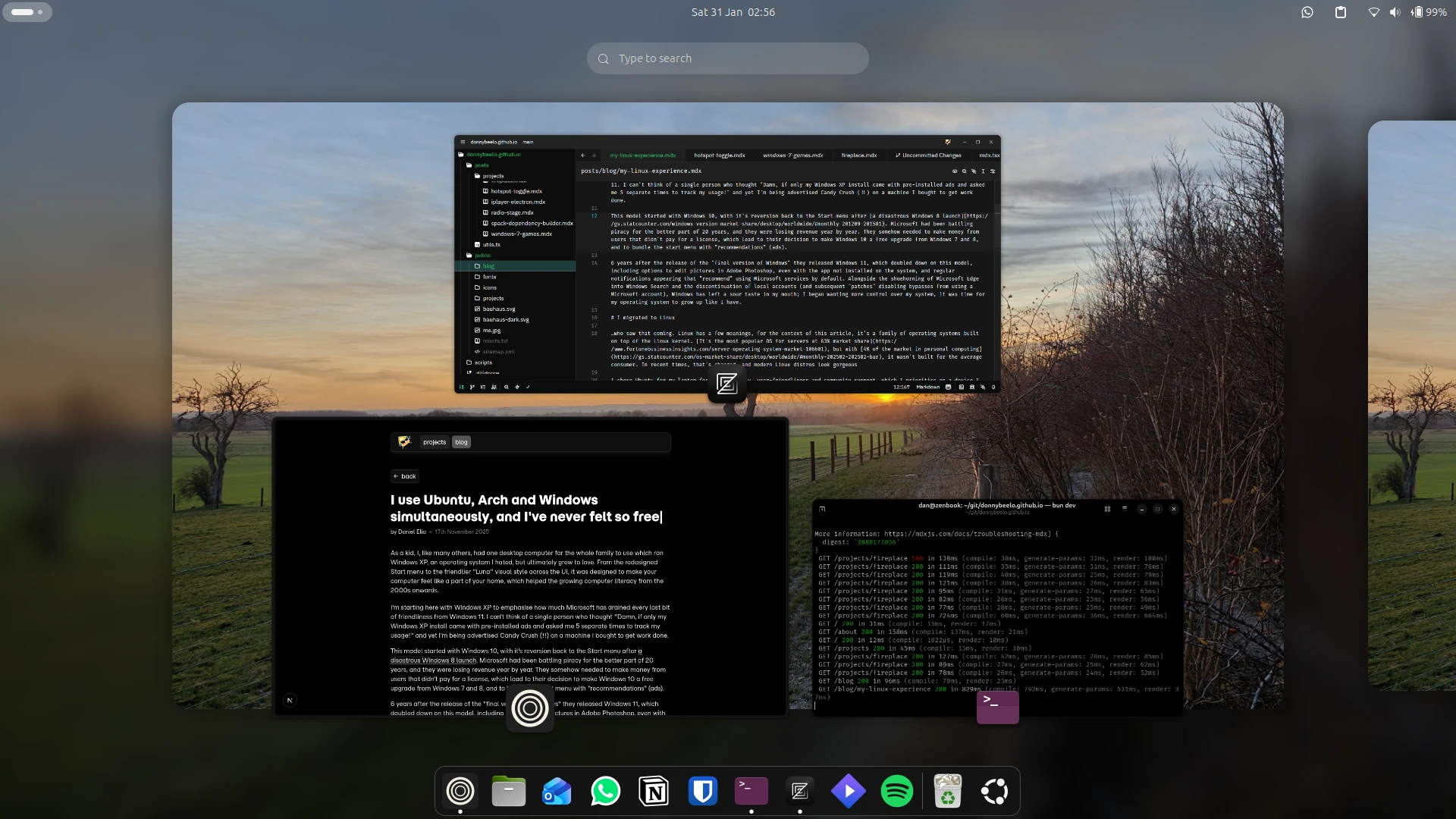
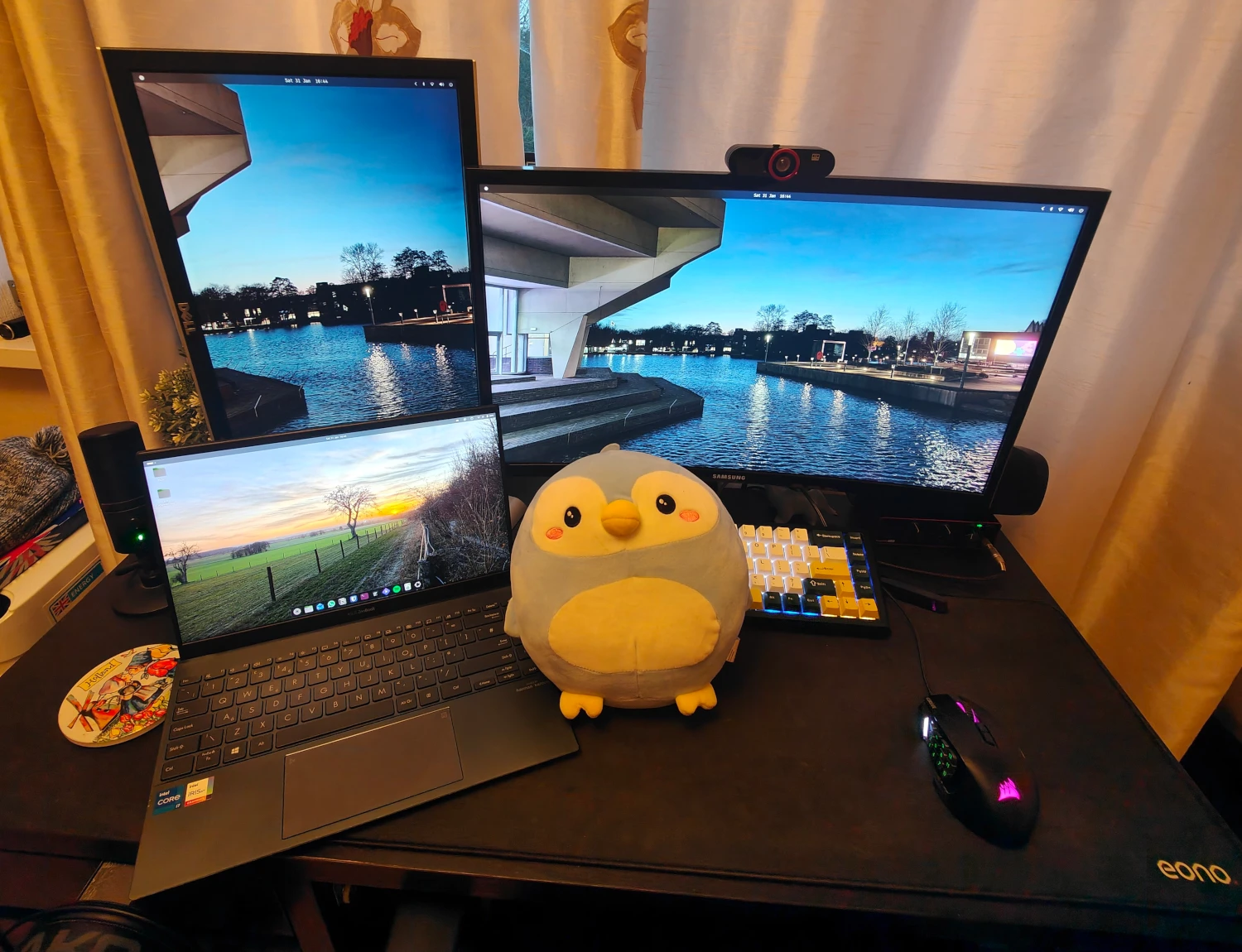
I chose Ubuntu for my laptop for its stability, user-friendliness and community support, which I prioritise on a device I do all my work on. The design language across the OS is very consistent for a Linux distro, which I've always prioritised in any form of software I use, and GNOME is highly customisable with extensions, allowing me to tweak the experience to my liking; heck, I've even made my own extension, which you should check out (wink wink).
For my desktop computer, I went for Omarchy. Although, in my opinion, DHH is a fork in a world of soup, he nailed it with this. Arch is one of the most fun Linux distros out there, and paired with Hyprland it's great for productivity, so much so I began reaching for my PC more often to get work done. On top of all of that, I have to commend the installation process; Arch is an absolute faff to get going, and to have to configure your window manager from scratch kills it for me, but Omarchy's simple installation process puts every other distro I've tried to shame, less to say it wipes the floor with Windows 11's OOBE.
Through these wonderful transformative experiences, I still decided to dual boot Windows on both machines, fearing I'd one day need Windows more than Linux and have to start from scratch, but the truth is that I haven't touched Windows once, except for when I needed its admittedly great screencast implementation, which Ubuntu has yet to match, and for one time I needed Visual Studio for a job interview. And of course to play Solitaire, which I have since solved on Linux.
Other than that, Ubuntu has served me well in terms of CPU usage, which in turn got me more mileage out of my battery, and my RAM usage was half of what it was on Windows 11. I also appreciated how relaxed Ubuntu is with updates, only performing them when I ask it to, a very welcome change from Windows' ethos of updating your system at gunpoint.
…but I still can't ditch Windows
However on the desktop, although Omarchy is a great home for getting stuff done, I still find myself running back to Windows for gaming. Valve has done great things with Proton, and I can play most of my library on Steam with little to no issues, but with anti-cheat software being incompatible with Linux, that strikes off many AAA games from even launching on Linux, including but not limited to the likes of Battlefield 6, Apex Legends, Fortnite, EA Sports FC 26, Valorant and Call of Duty: Warzone.
I don't play most of these games, of course, but this is a pretty shameful list of games that Linux straight up won't run. This isn't Linux's fault, but rather AAA game companies fearing Linux's openness and thus its potential for circumventing anticheat software. This is a real shame, as I would love to be able to game exclusively on Linux, but for now, in fear that I'll one day need to play a game bundled with kernel-level anticheat software, I have to keep Windows around with gritted teeth.
Doom and gloom aside, compatibility with Windows games has come a long way in recent years, with Valve to thank for a big portion of that. Their big bet on Linux with the Steam Deck hasn't only paid off, but propelled Linux into the mainstream. Proton has seen a lot of development, and many games that previously didn't work on Linux now do, making Linux a more viable option for a lot of gamers out there. Games like Minecraft and Factorio run even faster than on Windows (although they've been compatible with Linux for some time now), but even games like the Jackbox Party Pack series work just fine through Proton, which is great for those times I want to play games with friends at their house, away from my desktop PC.
Conclusion
While it isn't the total divorce from Microsoft I originally envisioned, this pragmatic 'best of both worlds' approach has turned my PC into a tool that finally works for me, rather than the other way around.
I've dipped my toe in the Linux pool a number of times over the years to get away from Windows, even back in the Windows Vista days, but up until the last couple of years Linux wasn't compatible enough with the software I used most frequently. Now, with Linux compatibility becoming a more prominent consideration for most developers, and with distros like Ubuntu and Omarchy making it easier than ever to get started, I've finally found a home away from Windows that I can happily use for both work and play.
Even if a total shift in the OS market is required before I can delete my Windows partition for good, I'm no longer in a rush. With Microsoft owning such a large chunk of the market through Xbox Game Pass and first-party titles, that day may be far off, but for the first time, my computer finally feels like it belongs to me.